
Stocks Available

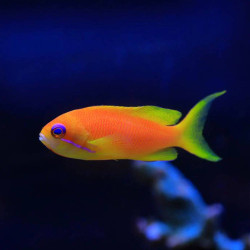
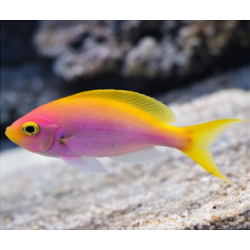
Lyretail Antias - Female S
SKU:215295
PSEUDANTHIAS SQUAMIPINNIS
0.5-1 INCH

Stock Available
Introduction:
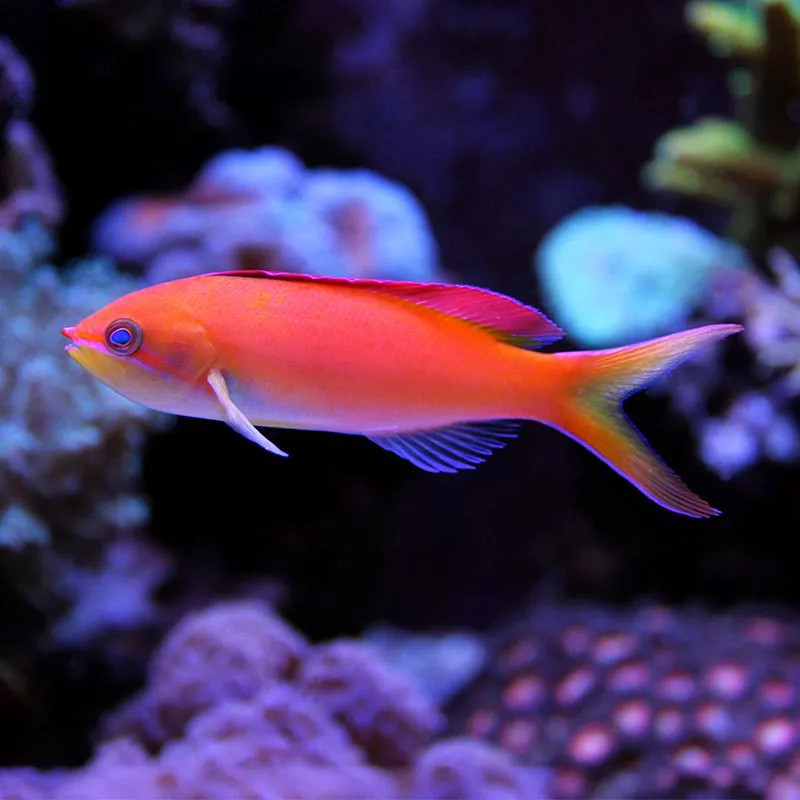
Common Names: Dispar Anthias, Peach Anthias, Madder Seaperch.
Natural Habitat: Found in coral reef environments across the Indo-Pacific region, particularly in areas with strong currents and abundant planktonic food sources. They often form schools above the reef.
Physical Characteristics:
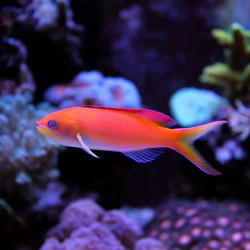
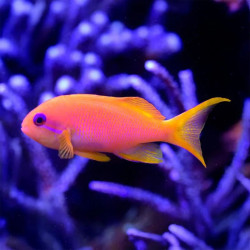
Appearance: Males display a brilliant orange to pink body with a subtle violet hue and often a pale blue dorsal fin. Females are slightly smaller and exhibit a softer peach coloration with less vivid accents.
Size: Typically grows to about 3-4 inches (7.5-10 cm) in length.
Lifespan: 5-7 years in well-maintained aquariums.
Habitat Requirements:
Tank Size: Minimum of 75 gallons for a small group; larger tanks are recommended to accommodate their active swimming and schooling behavior.
Water Conditions:
Temperature: 72-78°F (22-26°C).
pH: 8.1-8.4.
Salinity: 1.020-1.025 specific gravity.
Aquascaping: Provide live rock for shelter and perching, combined with open swimming areas. Dispar Anthias prefer tanks with moderate to strong water flow to mimic their natural habitat.
Diet:
Primary Diet: Planktivorous; feeds on zooplankton in the wild.
Supplemental Feeding: Offer high-quality frozen or live foods like mysis shrimp, brine shrimp, and copepods. Enriched flake or pellet foods designed for carnivorous fish can also be included.
Feeding Frequency: Requires frequent feedings (2-3 times daily) due to their fast metabolism and active nature.
Compatibility:
Temperament: Peaceful and social, thrives in groups of at least 3-5 individuals, ideally with one dominant male and several females.
Suitable Tank Mates: Compatible with other peaceful reef fish like gobies, wrasses, tangs, and clownfish. Reef-safe and coexists well with corals and invertebrates.
Incompatibilities: Avoid aggressive or predatory species such as triggers, groupers, or lionfish.
Care Level:
Difficulty: Moderate; requires consistent water quality, proper nutrition, and a well-structured environment to thrive.
Health Monitoring: Observe for signs of stress or illness, such as color fading or labored breathing. Regular water changes and a stable environment are critical.
Breeding:
Reproductive Behavior: Protogynous hermaphrodites, meaning females can transition to males in the absence of a dominant male.
Spawning: Mating typically occurs during the evening, with males displaying vibrant colors and elaborate courtship behaviors. Fertilized eggs are released into the water column.
Breeding in Captivity: Rare and challenging due to specific larval care requirements and planktonic feeding.
Economic Considerations:
Market Demand: A popular choice in the marine aquarium trade for their vibrant coloration and peaceful schooling behavior.
Pricing: Affordable compared to other anthias species, with price variations depending on size and regional availability.
Conclusion:
The Dispar Anthias is a captivating and active species that adds a splash of vibrant color to reef aquariums. Their peaceful nature and schooling behavior make them an excellent choice for aquarists seeking to replicate the dynamics of a natural reef. However, their care requires attention to water quality, frequent feeding, and maintaining a harmonious social group. With proper care, they can become a highlight in any saltwater setup.
Data sheet
16 other products in the same category:
Stocks Available
SKU:215295
0.5-1 INCH

Stocks Available
SKU:202890
Stocks Available
SKU:201611
Stocks Available
SKU:215451
3 INCH

Stocks Available

SKU:229796
2-3 INCH
Stocks Available
SKU:215295
0.5-1 INCH
Stocks Available
SKU:215633
2 INCHES
Stocks Available
SKU:215294
1.5 INCH
Stocks Available
SKU:202878
2-3 INCH
Stocks Available
SKU:217655
3 INCH
Stocks Available
SKU:215296
1.5 INCH
Stocks Available
SKU:221160
1-2 INCH
Stocks Available
SKU:215449
2 INCH
Stocks Available
SKU:228402
2.5-3.25 INCH
Stocks Available
SKU:202880
Medium
Stocks Available
SKU:202878
M